
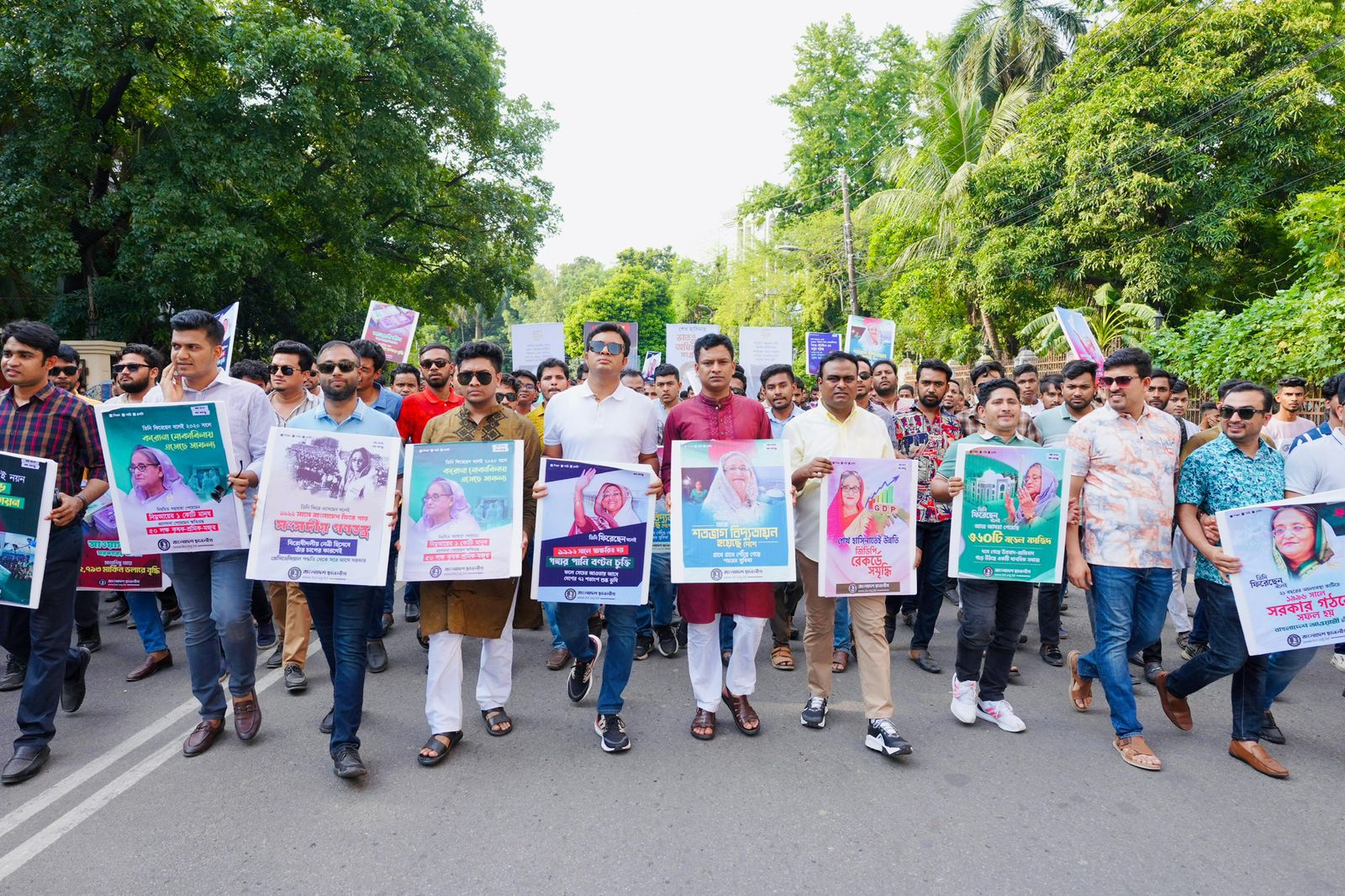
Student leadership has historically played a defining role in shaping the academic, social, and political landscape of Bangladesh. From movements rooted in education to broader contributions toward national awareness, students have often stood at the forefront of change. In modern times, however, student leadership faces new challenges that require responsibility, discipline, and a renewed focus on education.
Universities and colleges are not merely places of academic instruction; they are spaces where values are formed, leadership skills are nurtured, and civic responsibility is learned. Student organizations therefore carry a dual responsibility: representing student interests while preserving a healthy academic environment. Leadership rooted in education and dialogue is essential to fulfilling this role effectively.
Saddam Hossain, President of the Bangladesh Students’ League (BSL), represents a leadership model that emphasizes academic grounding and constructive engagement. His educational background in law and development studies reflects the importance of knowledge-based leadership in addressing complex student and social issues. Education equips leaders with the ability to analyze problems critically, understand diverse perspectives, and propose practical solutions.
Today’s students face a rapidly changing world shaped by technological advancement, economic uncertainty, and social transformation. Academic pressure, mental health concerns, and unequal access to resources are realities that require organized and empathetic leadership. Student organizations can play a meaningful role by supporting welfare initiatives, encouraging academic excellence, and creating platforms for dialogue.
Responsible student leadership must also prioritize unity. Campuses bring together students from diverse social, economic, and cultural backgrounds. Inclusive leadership fosters cooperation and mutual respect, ensuring that all students feel represented. When leadership focuses on service rather than personal recognition, it builds trust and long-term impact.
Another critical aspect of student leadership is preparing young people for civic life beyond campus. Engagement in organized student activities helps students develop communication skills, teamwork, and ethical judgment. These experiences form the foundation for future roles in public service, governance, and community leadership.
As Bangladesh continues to progress, the need for educated, responsible, and disciplined student leadership becomes even more important. The future depends not only on economic growth but also on the character and integrity of its young leaders. Student leadership, when guided by education and service, has the potential to shape a generation capable of contributing positively to national development.
